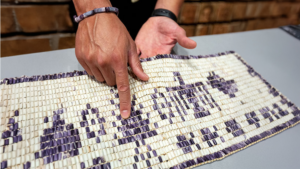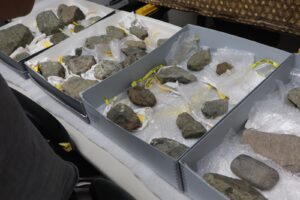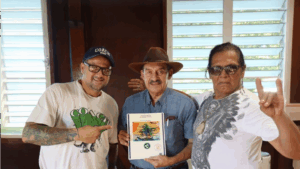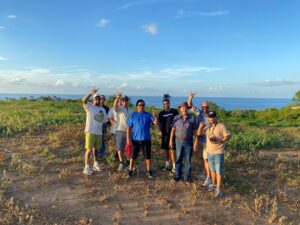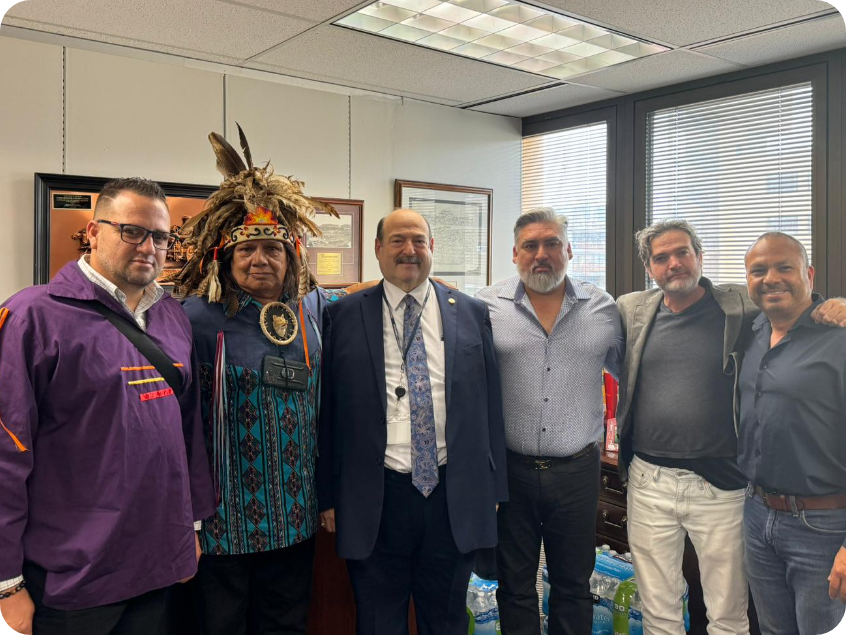
In a landmark moment for indigenous unity, theSovereign Ierahkwa Ne Kanienke/Iroquois Government and the first two communities of the Kuna have signed the historic Two Row Wampum and the Ever-Growing Tree of Peace treaties. This alliance, uniting the Kuna Yala with several other indigenous nations, marks the dawn of a new era of collaboration, technology sharing, and sustainable development for the indigenous peoples of Panama for a very unique pilot program.
The signing ceremony, attended by Rarakwisere, Prime Minister of the Ierahkwa Ne Kanienke Iroquois Government, Takoda Ahanu Minster of Finance, Ramon Nenadich Cacique de Borinken, and local Kuna chiefs, Leandro Ehrman Sagla of Nargana Yandup, Martin Montero Sagla of Akuanusadup, Axel Porfilio Mojica Advisor of Akuanusadup, and Maximiliano Ferrer former Cacique of the Conmarca KunaYala and advisor, symbolizes a powerful commitment to mutual respect, peace, and shared progress. This historic agreement is not merely symbolic; it is the first step in a tangible plan to bring transformative resources to the Kuna Yala communities, which have long been very marginalized and underserved.
“We extend our hands in brotherhood to our Kuna relatives, welcoming them to the Ever- Growing Tree of Peace,” said Prime Minister Rarakwisere. “This is not just a treaty; it is a living commitment to walk a parallel path of sovereignty, to share our strengths, and to build a future where our children can thrive. Our three foundational truths—Trade is Sovereignty, Commerce is Power, and Governance is Strength—will guide our shared journey.”
One of the most immediate and impactful benefits of this unification will be the introduction of free satellite internet coverage to the remote Kuna islands. For years, these communities have struggled with unreliable or non-existent internet and cellular service, a significant barrier to education, economic development, and communication. This new initiative, funded by contributions from the region’s tourism sector, will bridge the digital divide and connect the Kuna people to the world.
The local Kuna chiefs expressed their optimism for the future. “For too long, our people have been left in the dark,” said the Sagla. “This alliance with our Ierahkwa Ne Kanienke/Iroquois
brothers and sisters brings a new light. It is a promise of a better future, not just for us, but for all indigenous peoples.”
Beyond internet access, this partnership will usher in a wave of development projects tailored to the specific needs of the Kuna communities. These initiatives include:
•Infrastructure Development: Building and improving essential infrastructure, including schools,
housing, and hospitals.
•Economic Empowerment: Introducing modern financial tools such as credit card processing, transparent blockchain solutions, and access to the Bank of Indigenous International Settlements (BIIS).
•Resource Management: Implementing sustainable solutions for water purification and resource management.
•Education and Healthcare: Enhancing educational opportunities and healthcare services for all Island communities
This unification is a testament to the resilience and vision of indigenous peoples. It is a bold declaration that they will no longer be passive recipients of aid, but active architects of their own destiny. The Ierahkwa Ne Kanienke/Iroquois and the Kuna are not just building a stronger future for themselves; they are creating a model of indigenous-led development that can inspire other indigenous nations across the Americas.
About the Ierahkwa Ne Kanienke/Iroquois Government:
The Ierahkwa Ne Kanienke/Iroquois Government is a sovereign, independent commercial NATION with a rich history of self-governance as the GRANDFATHER of Constitutions, s the keepers of the Eastern Door , the Iroquois Confederacy, they are guided by the Kaianerehkowa (Great Law of Peace). Their sovereignty has been recognized internationally since 1710 and reaffirmed by the 100th U.S. Congress in 1987/1988.
About the Kuna Yala People:
The Kuna people are an indigenous group residing in the autonomous San Blas Islands and parts of mainland Panama. With a vibrant culture and a strong tradition of self-governance, the Kuna have successfully preserved their language, customs, and matriarchal society. Their economy is based on tourism, fishing, and the creation of intricate molas, a testament to their artistic heritage.
Media Contact:
Nick Betancourt / Tehahon Tjoshoon Kwe
Minister of Communications
Ierahkwa Ne Kanienke Government
Nicholas.betancourt@inkg.gov
+1-786-287-1725